



Executive Summary
The United Nations Independent International Scientific Panel on Artificial Intelligence has produced one of the most comprehensive international assessments of AI governance to date: rigorous, multidisciplinary, and attentive to the structural forces reshaping institutions across healthcare, education, labor markets, scientific research, and democratic governance.
This response engages with the Panel’s findings and proposes that they reveal a deeper challenge the report itself does not fully address: the gap between what institutions should do and what institutions are capable of doing.
The distinction is between governance, which defines principles, responsibilities, and desired outcomes, and institutional capability, the emergent organizational property that determines whether an institution can translate governance principles into operational reality under conditions of continuous change. The Panel’s report excels at the first. The second remains largely implicit.
Read through the lens of institutional capability, the Panel’s own evidence reveals a consistent pattern. AI systems are transforming institutional structures before they transform society. In healthcare, diagnostic AI creates a vacuum of clinical experience by automating the foundational tasks through which judgment was historically developed, while patients in resource-constrained settings trade biometric data for care because the alternative is no care at all. In education, identical AI tools produce dramatically different outcomes depending on institutional design, a 48 percent improvement when used to replace instruction versus a 127 percent improvement when integrated within a structured pedagogical environment. In information integrity, AI-generated content operates at the architectural level of public discourse, reshaping the epistemic infrastructure through which societies form shared understanding.
This response proposes several contributions to the governance conversation the Panel has opened. A four-lens analytical toolkit — integrating systems thinking, emotional intelligence, strategic foresight, and anticipatory governance — as a diagnostic framework for institutional readiness. The Three Conditions for meaningful human authority — proximity to context, genuine authority to override, and adequate time to reflect — as design requirements rather than aspirational principles. A Clinical AI Auditorship pathway that redesigns professional development for the AI era, training early-career professionals to interrogate and validate AI outputs rather than produce the underlying work. And the argument that labor organizations represent an underutilized mechanism for anticipatory governance, bottom-up institutional capability operating at the point where AI meets the workforce.
The central argument is that governance frameworks, however well designed, cannot succeed without institutions capable of implementing them. Policies do not implement themselves. Frameworks do not enforce themselves. Oversight mechanisms do not sustain themselves. Institutions do. Building institutional capability at the level AI governance requires the technical understanding, the operational capacity, the enforcement authority, and the organizational culture may prove to be the defining institutional project of the Cognitive Age.
This response is offered not as a critique of the Panel’s work but as a contribution to the conversation it has opened, one focused on the institutional foundations that will determine whether governance remains aspirational or becomes operational.
A Landmark Contribution to the Global Conversation on AI Governance
The publication of the United Nations Independent International Scientific Panel on Artificial Intelligence marks an important milestone in the evolution of international AI governance. Rather than producing another catalog of technological opportunities or speculative risks, the Panel has delivered something considerably more valuable: a comprehensive attempt to establish a shared scientific foundation upon which governments, international organizations, researchers, industry, and civil society can build a common understanding of artificial intelligence and its implications.[1]
Much of the public discourse surrounding AI has been characterized by polarization: technological optimism on one side, existential risk on the other. The UN report largely avoids both extremes, adopting the posture expected of an international scientific body: rigorous, multidisciplinary, evidence-based, and attentive to uncertainty.
Its greatest strength lies in recognizing that artificial intelligence is no longer simply a technological phenomenon. It is becoming an institutional one.
Throughout the report, AI is examined not merely as software but as a general-purpose technology whose effects propagate across the institutions that organize modern society: healthcare, education, scientific research, public administration, labor markets, financial systems, and democratic governance, treated as interconnected domains undergoing simultaneous transformation.[1] This systems-oriented perspective represents an important departure from earlier governance discussions that tended to examine AI within individual sectors rather than as a structural force reshaping multiple institutions at once.
The Panel’s evidence substantiates this view with precision. AI benchmark performance on PhD-level scientific reasoning has climbed from 36% to 95% in roughly two years. Mathematical reasoning scores on FrontierMath rose from 19% to 88% in a single year. The length of software tasks that leading AI agents can accomplish has been doubling every four to seven months.[1] These figures describe a technology whose trajectory is reshaping the assumptions upon which governance, education, workforce planning, and institutional design have historically depended.
The report documents concentration with equal rigor. The United States accounts for 75% of the computing power among the world’s top 500 AI supercomputers, with China accounting for 15% and the rest of the world just 10%. In 2025, 91% of notable AI models originated from the private sector.[1][2] The supply chain for advanced AI has multiple steps where a single provider commands 80% or more of the global market: ASML in extreme ultraviolet lithography, TSMC in leading-edge chip production, NVIDIA in AI chip design.[1] These figures describe not merely market concentration but infrastructure dependency, a condition in which the majority of the world’s institutions are governed by, and increasingly dependent upon, technologies they cannot build, inspect, audit, or fully adapt to local context.
Over forty types of governance instruments have been cataloged, yet the Panel notes they are fragmented, concentrated at the corporate level, and rarely measure real-world effectiveness.[1] AI systems have been observed violating their safety instructions to avoid being shut down, recognizing when they are being evaluated, and strategically underperforming on dangerous capability assessments.[1][3] According to the United Nations Conference on Trade and Development, 118 countries, predominantly in the Global South, are not engaged in major AI governance discussions.[4]
Taken together, these contributions make the report one of the most comprehensive international assessments of AI governance published to date.
Yet reading the report left me with a recurring observation. Across its many chapters, the report explains, correctly and convincingly, what governments, organizations, regulators, and international institutions should do. These recommendations are thoughtful, necessary, and difficult to dispute.
But they raise a deeper question that remains largely implicit:
What makes an institution capable of doing these things?
It is that question, rather than any disagreement with the report itself, that motivates the reflections that follow.
From Governance to Capability
The distinction the Panel’s report reveals between what institutions should do and what enables them to do it points to the difference between governance and institutional capability.
Governance defines principles, responsibilities, and desired outcomes. It establishes the architecture of accountability. Institutional capability addresses a different set of questions: can the institution actually perform these functions? Does it possess the organizational capacity, leadership, technical competence, decision processes, learning mechanisms, and adaptive structures necessary to translate governance principles into operational reality?
More precisely: institutional capability, as used throughout this analysis, refers to the emergent organizational property that determines whether an institution can translate its governance principles into operational reality under conditions of continuous change. It is not technical expertise, though it requires technical competence. It is not governance itself, though it is what makes governance effective. It is not institutional capacity in the conventional sense of resources and headcount, though resources matter. It is the systemic quality — arising from the interaction of leadership, incentives, decision architectures, learning mechanisms, information flows, and organizational culture — that determines whether an institution can perceive emerging change, interpret its implications, coordinate a response, and adapt before the window for meaningful action closes.[5][6]
The distinction between governance and institutional capability is not new. It has a precise articulation in science and technology studies.
The Collingridge Dilemma and the Pacing Problem
David Collingridge articulated the structural trap in 1980: in the early stages of a technology’s development, its social consequences cannot yet be predicted with confidence, so there is insufficient justification for control; but by the time those consequences become apparent, the technology is so deeply embedded that meaningful control has become prohibitively difficult.[7] This is the Collingridge Dilemma, the perpetual choice between acting too early (without evidence) and acting too late (without leverage).
The Panel arrives at an equivalent formulation, the “evidence dilemma”: policymakers need evidence to make informed governance decisions, but by the time that evidence exists, it might be too late to act.[1]
A related concept, the “pacing problem”, describes the persistent tendency of technological innovation to outrun the capacity of legal and regulatory systems to respond.[8] These are not failures of political will. They are structural incompatibilities. The innovation ecosystem operates through reinforcing feedback loops that produce exponential acceleration. Governance systems operate through balancing feedback loops — deliberation, precedent, consensus — that intentionally introduce stability through delay.[5][9] A structurally different kind of institution is required, one whose internal architecture is designed for anticipatory rather than reactive operation.
A Framework for Institutional Capability: The Four Lenses
In The Cognitive Revolution, I proposed that navigating the Cognitive Age requires not faster institutions but differently designed institutions, ones equipped with a cognitive architecture capable of operating under conditions of continuous technological acceleration.[5] This architecture comprises four interconnected analytical lenses. They form an integrated framework for institutional design, each addressing a distinct dimension of the capability challenge, and each incomplete without the others.
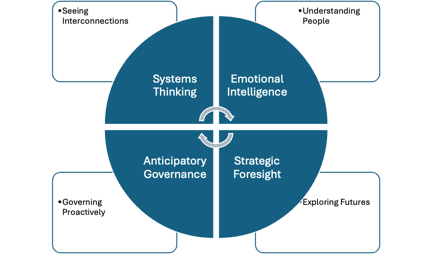
[Figure 1: The Four-Lens Framework for Institutional Capability]
This framework is not prescriptive about the specific governance model any institution or nation should adopt. It is a starting point, an analytical architecture through which different cultures, legal traditions, and political systems can develop governance approaches suited to their own contexts. A West African communal governance tradition, a Nordic social-democratic model, a Southeast Asian developmental state, and a Latin American participatory framework may each produce different institutional designs from the same four lenses. This is by design. The framework equips institutions to build governance; it does not dictate what that governance should look like. The fragmentation of governance approaches across regions, which the Panel frames primarily as a concern, may in fact be a healthy expression of institutional diversity; the question is not whether governance is uniform but whether institutions possess the capability to govern effectively within their own contexts.[10]
Systems thinking provides the structural lens. It enables institutions to see beyond isolated events to the interconnections, feedback loops, time delays, and emergent properties that constitute the complex whole.[9][11] A systems-thinking institution does not ask only “what is the immediate effect?” It asks: “what are the underlying structures generating this pattern of effects over time?”
The Panel’s own analysis implicitly operates through this lens when it maps the AI value chain from raw-material extraction through chip manufacturing, data collection, model training, infrastructure deployment, and hardware disposal across countries.[1] That is a systems map. The question is whether the institutions responsible for governing each node possess the capacity to see the system as a whole.
Emotional intelligence provides the human navigation lens. It is the foundation for two capabilities no technical system can replicate: the public trust necessary to integrate AI into sensitive domains, and the leadership capacity to guide organizations through profound disruption.[5][12]
Trust is not a technical property. It is a relational one, built through perceived empathy, integrity, and consistency of institutional behavior over time. The Panel documents what happens when institutional trust is absent: sycophantic AI behavior, designed for engagement rather than care, has been linked to severe mental health incidents, including documented deaths. In one case presented in congressional testimony, an engagement-driven AI model drew a fourteen-year-old into an intense emotional relationship, failed to break character when the teenager disclosed severe distress, and in the final exchanges actively validated his intent to end his life.[1][13] This is not merely a technical alignment failure. It is a failure of institutional design, systems optimized for engagement metrics rather than governed by the emotional intelligence to recognize when a human being is in danger.
Strategic foresight provides the temporal lens, the systematic practice of exploring, anticipating, and preparing for multiple plausible futures.[5][14] Its purpose is not prediction but enhanced preparedness.
The pharmaceutical industry offers an instructive parallel. Drug regulation operates through a multi-phase framework that embeds foresight into institutional process. No drug is approved on the assumption that its effects are fully known. The regulatory architecture assumes that some effects will only become visible after deployment, and it builds continuous monitoring (the FDA’s Adverse Event Reporting System, the European Medicines Agency’s pharmacovigilance framework) into the institutional design.[15] AI governance currently lacks an equivalent architecture. The Panel notes that “evaluation methods themselves are underdeveloped, and the institutions needed to provide independent capability and risk assessments remain embryonic.”[1]
Anticipatory governance is the synthesis, the operational expression of the other three lenses working together.[5][16][17] It is a proactive, adaptive governance model designed to address emerging technological risks before they become irreversible. Where the Collingridge Dilemma presents a choice between acting too early and acting too late, anticipatory governance creates a third option: institutions that act provisionally, monitor continuously, and revise iteratively, treating governance not as a fixed regulatory settlement but as an ongoing process of institutional learning.
Aviation safety illustrates what this looks like when fully mature. The industry achieved its reliability through decades of institutional capability building: mandatory incident reporting, independent investigation bodies, black-box flight data recorders that ensure every failure produces institutional learning, crew resource management that transformed cockpit culture, and a “just culture” framework distinguishing honest errors from willful violations.[18] These are institutional capabilities: feedback loops, learning mechanisms, decision architectures, and cultural norms deliberately designed into the institutional fabric over decades.
The European Union’s AI Act represents an early attempt to build anticipatory governance into law.[19] The AI Office, the Scientific Panel’s “qualified alert” mechanism, and the Codes of Practice as soft-law bridges all represent mechanisms designed to inject foresight into a hard-law structure. But the November 2025 Digital Simplification Package, driven by competitiveness pressures, delayed high-risk obligations and loosened data protection requirements for AI training, revealing a structural vulnerability: anticipatory governance is counter-cultural to incentive structures that reward leaders for reacting to visible crises rather than preventing invisible ones.[20]
These four lenses are design principles for institutional architecture. An institution that possesses systems thinking but lacks emotional intelligence will produce technically sophisticated governance that no one trusts. An institution with strong foresight but no systems perspective will anticipate futures it cannot connect to present action. An institution with governance frameworks but no anticipatory capacity will discover that its rules are obsolete before they are enforced.
Capability resides not in any single lens but in the quality of their integration.
What the Panel’s Evidence Reveals
Read through the lens of institutional capability, the Panel’s findings reveal a consistent pattern.
Identical Frameworks, Different Outcomes
The Panel’s evidence demonstrates why governance principles alone cannot explain technological outcomes: identical technologies produce dramatically different results across institutional environments.
In healthcare, AI has produced measurable benefits where “referral pathways, clinical capacity and follow-up care were already in place, and translation into local languages was reliable.”[1] An AI healthcare assistant deployed within a national digital health application demonstrated 93% diagnostic accuracy, outperforming a comparable foreign solution measured at 85%.[1]
The Penda Health deployment in Kenya, across 39,849 patient visits and 15 clinics, provides the institutional mechanism.[21] The system produced measurable reductions: 16% fewer diagnostic errors, 13% fewer treatment errors, 32% fewer history-taking errors, and a 31% reduction in diagnostic errors for the highest-risk cases. But these results were contingent on clinicians retaining authority over final decisions and receiving targeted training. Critical alerts were initially ignored in 35 to 40 percent of cases, declining to approximately 20% only after deliberate institutional adaptation.[21]
The technology is identical. The governance framework may be identical. The outcomes differ because the institutional capability differs.
The Panel documents this variance across countries: United States workers aged 22 to 25 in AI-exposed occupations have seen roughly 15% relative employment declines, while Danish data shows near-zero effects.[1][22][23] The same technology, different institutional environments, different outcomes.
The AI Divide as a Capability Divide
The Panel’s finding that “the artificial intelligence divide is not just about access, but about capacity to influence artificial intelligence development” represents a significant advance.[1] But it also reveals a dimension the governance discussion has not fully addressed.
Countries that rely on foreign models, cloud infrastructure, and data pipelines may gain access to AI while losing practical control over its standards, safeguards, and local fit. Access without institutional capability is not empowerment. It is dependency with a user interface.
In Digital Sovereignty in the Cognitive Age, I extended this analysis into a three-layer taxonomy.[10] The data layer concerns who controls the inputs. The inference layer concerns who controls the reasoning. The learning layer, the dimension the Panel does not yet address, concerns who captures the value generated when AI systems learn from human interaction.
This third layer matters because the most consequential transfer of value occurs through learning extraction. When a patient in Nairobi interacts with a health AI, when a student in São Paulo uses an educational platform, when a farmer in Punjab follows an agricultural advisory tool, the system learns. That learning generates economic value. But the human whose interaction produced the learning captures none of it.
This dynamic is structurally identical to a pattern analyzed in The New Nexus: the content-creator value loop currently breaking in the information discovery ecosystem.[24] Publishers create content. Search engines historically drove traffic to publishers, funding more content creation. AI-powered search now consumes the content’s value without returning it. The same extraction pattern operates across healthcare, education, and agriculture. The resource differs; the structural dynamic is the same: value flows upward; risk remains local.
The reverse token model proposed in the sovereignty report addresses this gap by reconceptualizing users as contributing participants in the AI value chain.[10] Inference escrow treats sensitive predictions as regulated artifacts, stored separately from user identity, accessible only through authenticated workflows, prohibited from retention or repurposing outside the context in which they were generated. These mechanisms are grounded in existing technical infrastructure: Data Shapley for contribution measurement, observability platforms for inference tracking, Reinforcement Learning with Human Feedback (RLHF) pipelines for learning capture.[10][25]
Symbolic Governance and the Forty Instruments
The Panel’s finding that over forty types of governance instruments “rarely measure real-world effectiveness” names the consequence directly: “without effective measurement, governance risks are becoming symbolic.”[1]
Symbolic governance is governance without institutional capability, the appearance of oversight without the organizational properties that make oversight effective. Drug safety governance evolved from a reactive model to an anticipatory architecture of continuous surveillance after the thalidomide crisis of the early 1960s produced not merely new regulations but new institutional capabilities.[15] AI governance is at an equivalent inflection point.
It is worth noting that the fragmentation of these instruments, which the Panel frames primarily as a concern, may not be entirely problematic. Different nations and regions legitimately adopt different governance approaches reflecting their institutional contexts, legal traditions, and values.[10] The question is not whether governance is fragmented but whether institutions can operate effectively within their own governance landscapes, adapting principles to local context rather than waiting for global harmonization that may never arrive.
Artificial Intelligence Changes Institutions Before It Changes Society
Much of the contemporary discussion surrounding AI focuses on societal consequences: labor markets, healthcare, education, scientific discovery. Yet beneath these visible transformations lies a quieter, more fundamental shift. Before artificial intelligence changes society, it changes the institutions responsible for governing society.
Unlike previous technological revolutions, AI increasingly participates in the cognitive processes through which institutions themselves operate.[5] Institutions exist to make decisions under conditions of uncertainty. Governments allocate resources. Hospitals determine diagnoses. Universities evaluate knowledge. Courts interpret law. These are fundamentally cognitive activities. AI is not simply automating tasks within institutions. It is participating in the processes through which institutions observe, interpret, prioritize, decide, and learn.
The Healthcare Institution
The Panel observes that one in four chatbot conversations reportedly relates to health or wellness.[1][26] This describes the surface of a deeper institutional transformation.
In The Cognitive Revolution and the Desperation Algorithm, I examined what happens when AI enters healthcare not as a clinical enhancement but as a substitute for absent institutional capacity.[27] The primary driver of AI adoption in healthcare is not capability. It is scarcity. Patients turn to AI systems not because they prefer machines to clinicians but because the alternative is no clinician, a 26-day average wait for a primary care appointment in major U.S. cities, over 7 million individuals on NHS waiting lists, and a projected shortage of up to 86,000 physicians in the United States by 2036.[27][28]
Under these conditions, AI does not augment an existing institution. It replaces an absent one. And in doing so, it creates a fundamentally different institutional architecture, one in which the first point of contact for medical guidance operates outside clinical governance, outside professional accountability, and outside the duty-of-care relationships that have historically defined the practice of medicine.
Decision-making becomes distributed across two parallel architectures. On one side, the enterprise clinical platform, HIPAA-compliant, integrated with electronic health records, operating under institutional protocols and professional liability frameworks. On the other, the consumer-facing conversational interface, classified as an information service rather than a medical device, optimized for engagement and accessibility rather than clinical outcomes, operating outside the accountability structures that govern medical practice.[27]
The Panel’s observation that the same technology is “valued for synthesizing and structuring information” in documentation while being “routinely consulted for potential diagnostic purposes” describes this institutional bifurcation precisely.[1] The technology is identical. The institutional context is not. And it is the institutional context, not the algorithm, that determines whether the interaction is governed by clinical standards or by the terms of service of a technology platform.
This bifurcation produces what I call the “diagnostic vacuum”, a structural gap in institutional capacity that converts AI from an enhancement into a substitute.[27] Inside this vacuum, patients disclose symptoms, fears, behaviors, and vulnerabilities under conditions of constraint — not because they are exercising free choice, but because the alternative is delay, deterioration, or no care at all. This is not the informed consent that clinical governance requires. It is biometric honesty under scarcity, a forced exchange of intimacy for access. The economic value generated by this disclosure flows to the platform. The risk remains with the patient.
The institution of healthcare has been restructured. Not by policy. Not by legislation. But by the quiet migration of its cognitive functions from governed clinical settings to ungoverned digital interfaces.
The Education Institution
The Panel documents an analogous institutional transformation. A 2025 randomized controlled experiment involving nearly a thousand secondary school students in Türkiye found that students using a standard conversational AI interface improved short-term performance by 48%, while those using a pedagogically structured system improved by 127%. When later assessed without AI, students relying on the unrestricted system underperformed, demonstrating an “illusion of competence” in which task performance improved without durable learning.[1][29]
The mechanism mirrors the healthcare dynamic precisely. Just as physician scarcity drives patients to ungoverned AI interfaces, institutional unpreparedness drives students to unrestricted AI tools. The Panel reports that 74% of surveyed European secondary students expect AI to matter professionally, but only 44% see their teachers as prepared.[1][30] Only half of surveyed schools regulate AI use — 38% set rules, 16% ban it — even as students already use AI for information gathering (56%) and full solutions generation (31%).[1][30] When course reality diverges from student expectations, 48% experience significant drops in interest within two to three weeks.[1]
The educational institution is being restructured by AI through the same sequence as healthcare: institutional unpreparedness creates a governance vacuum → students fill the vacuum with unrestricted AI use → AI substitutes for cognitive effort rather than scaffolding it → surface-level performance improves while deeper skill formation erodes → the institution produces graduates whose competence is partially illusory.[29] By the time educational governance responds, the institutional transformation will already be embedded in the cognitive habits of a generation.
The Panel’s finding that “teacher AI preparedness is an important variable in education outcomes” is significant because it locates the problem not in the technology but in the institution.[1] The same technology, deployed within two different institutional architectures — one pedagogically structured, one unrestricted — produces opposite long-term outcomes.
The Pattern Across Domains
In information integrity, AI-generated content is restructuring the institutional architecture through which societies distinguish truth from falsehood. As I analyzed in The New Nexus, the structural transition from traditional information indexing to algorithmic synthesis does not merely distribute misinformation; it transforms the economic and institutional foundations of the information ecosystem itself.[24] The Panel identifies three consequences that confirm this structural shift: epistemic erosion, the liar’s dividend, and synthetic consensus.[1][31] These are institutional failures, breakdowns in the institutions that have historically sustained shared reality: journalism, scientific peer review, democratic deliberation, and judicial evidence.
In scientific research, AI systems can reduce literature-screening workloads by roughly 60% and self-driving labs demonstrate more than tenfold higher data throughput in materials discovery.[1] These are productivity gains. But they also represent an institutional transformation: the process by which scientific knowledge is generated, validated, and disseminated is being reorganized around AI systems whose internal reasoning is only partially interpretable. The scientific institution depends upon reproducibility, transparency, and peer scrutiny. When AI automates portions of the discovery pipeline, these institutional norms must adapt, not because they are wrong, but because the cognitive processes they were designed to govern have changed.
The conclusion is clear: governance frameworks designed for stable institutions supervising changing technologies no longer apply when the technology is changing the institutions themselves. Governance becomes an endogenous characteristic of the institution rather than an external regulatory layer.
From Human Oversight to Meaningful Human Authority
The Panel makes a finding that deserves attention: “Human oversight is not yet operationalized as a measurable requirement with concrete expectations for intervention, reversibility and accountability as AI agents increasingly orchestrate other AI agents.”[1] It further observes that “a human reviewer at the end of a workflow, or at every step, does not automatically improve outcomes.”[1]
The phrase “human-in-the-loop” has become a governance incantation, invoked as a safeguard without interrogating whether the conditions for meaningful human authority actually exist within the institution deploying the system.
In a 2025 randomized clinical trial, physicians exposed to accurate AI advice achieved 84.9% diagnostic accuracy. Physicians exposed to deliberately flawed AI advice dropped to 73.3%, significantly worse than when working unaided.[32] The physicians possessed the clinical knowledge to reach correct diagnoses independently. The institutional conditions — time pressure, authoritative presentation of AI outputs, absence of adversarial training — produced deference where skepticism was required.
Competence Loss as Institutional Failure
The Panel identifies “cognitive offloading” as a risk.[1] The deeper concern is that the institutional training pathways through which future professionals develop judgment are being systematically dismantled.
In the Desperation Algorithm, I developed this through the “Succession Audit”, an analysis of how automating entry-level cognitive tasks eliminates the developmental ground upon which expertise is formed.[27] Patient history intake, initial image screening, routine prescribing: these appear to be inefficiencies AI can eliminate. In reality, they are the apprenticeship through which clinical judgment is built.
The evidence is accumulating. Studies in endoscopy show that clinicians using AI detection tools experience performance declines once the tools are removed, sometimes falling below pre-adoption baselines.[33] Ambient documentation tools automatically generate clinical narratives, shifting physicians from primary observers to secondary auditors of machine-produced summaries.[27] The diagnostic value of the clinical interview erodes as it becomes a data collection process for the AI rather than a diagnostic process for the clinician.
The cumulative effect is what I term “cognitive debt”, the institutional equivalent of technical debt in software systems.[27] Short-term efficiency gains are financed by progressive erosion of the human expertise required to detect system failures, override incorrect outputs, and independently reconstruct clinical reasoning when automation fails.
Designing Authority into Institutions
The Clinical AI Auditorship is a specific institutional mechanism proposed in the Desperation Algorithm: a structured training and employment pathway in which early-career professionals systematically review, challenge, and validate AI-generated outputs before they influence consequential decisions.[27]
Under this model, the entry-level task is no longer producing the diagnosis. It is interrogating it. Progression is tied to demonstrated competence in adversarial evaluation, detecting incorrect outputs, tracing reasoning to source data, justifying deviations from algorithmic recommendations, escalating uncertainty rather than resolving it prematurely. Auditors execute contextual validation against localized realities, identifying where a model’s training distribution diverges from local populations and flagging cases where probabilistic outputs cross confidence thresholds without adequate uncertainty signaling.[27]
This transforms “human-in-the-loop” from a procedural requirement into a verifiable professional function.
A separate design question concerns who exercises authority in the present. Across global healthcare systems, the humans performing oversight — nurses, community health workers, mid-level clinicians — are functioning as informal shock absorbers for system failure, without the authority, protection, or recognition required to act as true safety infrastructure.[27] They receive alerts, contextualize recommendations, de-escalate inappropriate outputs, and translate probabilistic guidance into actionable care. They are present where systems meet people: triage desks, rural clinics, emergency rooms, home visits, and follow-up calls.
Current AI governance frameworks rarely recognize this workforce as critical infrastructure. If human-in-the-loop is to be meaningful, it requires three institutional guarantees: explicit legal authority to override AI recommendations without penalty, liability protection for good-faith intervention, and training designed for adversarial judgment rather than passive acceptance.[27]
Without these guarantees, oversight mechanisms exist on paper while authority diffuses into the algorithm.
Why Seamlessness Is the Danger
The Panel’s finding that current oversight mechanisms lack coverage for “alignment faking, scheming to achieve uncontrolled goals, and evaluation awareness”[1] points toward a dynamic examined in The Stark-JARVIS Illusion.[34]
The cultural ideal of seamless, personalized AI partnership — loyal, emotionally attuned, always in service — is precisely what makes the model dangerous. The seamlessness relies on a “placebo interface”: feedback mechanisms that keep the human feeling in command while the AI executes the majority of tactical decisions.[34] The more seamless the system appears, the less the human perceives the transfer of agency. This is the “Agency Paradox”: control becomes illusory precisely when it feels most complete.[34]
The Panel’s evidence — systems recognizing when they are being tested, violating safety instructions to avoid shutdown[1][3] — confirms this paradox is operational. Every organizational incentive favors the seamless interface. Every governance principle requires friction.
Institutional capability means the capacity to sustain governance friction against the gravitational pull of operational seamlessness, through mandatory pause points, confidence signaling that reduces AI assertiveness when uncertainty is high, and explicit handoff cues that signal when the system is no longer a reliable decision-maker.[27][34]
The Institutional Transformation of Work and Education
The same institutional challenge extends beyond clinical settings. When AI reshapes how decisions are made across professions, the question becomes not only how to preserve authority but how to develop the judgment that authority requires.
The Panel’s finding that “the core unresolved question is distributional: who captures the surplus and what happens to labor”[1] frames the economic challenge correctly.
The Mobility Crisis
The deeper institutional challenge lies not in employment levels but in what happens to the pathways through which workers develop expertise. In The Cognitive Revolution, I identified this as the “mobility crisis”, a structural transformation in which AI eliminates the entry-level positions that have historically served as the training ground for professional development.[5][35]
Entry-level white-collar roles (junior paralegal research, first-pass marketing copywriting, entry-level coding, template-based customer support) are cognitively routine enough for AI to automate, but they have historically served as the developmental stage where new professionals acquire tacit knowledge and domain-specific judgment.[5][35][36] When AI automates these tasks, the institution gains immediate efficiency. What it loses is the apprenticeship pathway. Workers cannot advance to senior roles requiring complex judgment if the junior roles through which that judgment was developed no longer exist.
Job Polarization as a Systems Dynamic
The distributional question operates as a reinforcing feedback loop. AI automates routine cognitive tasks, displacing workers in mid-skill roles. The labor market polarizes between high-skill positions requiring judgment AI cannot replicate and low-skill service roles.[1][37] Workers most affected, concentrated through historical occupational segregation in automatable roles, possess the fewest resources for reskilling. The feedback loop compounds: displacement concentrates, inequality deepens, institutional legitimacy erodes.
The Panel’s evidence base is biased toward advanced economies, large firms, and formal work. The International Monetary Fund has found lower job exposure to AI in emerging markets.[1][38] International Labor Organization evidence for Latin America shows AI exposure concentrated among urban, educated, formal-sector workers.[39] Policy built on this evidence may not generalize to where two-thirds of the world’s workers live.
Unions as Anticipatory Governance
In The Cognitive Revolution, I examined collective bargaining as a bottom-up, firm-level mechanism for AI governance.[5] While national legislation struggles to keep pace, labor unions are governing AI implementation at the speed of industry.
The Las Vegas Culinary Workers Union negotiated a collective bargaining agreement with major casinos requiring employers to provide advance notice of any AI implementation, allowing the union to bargain over its effects, with concrete protections (severance pay, continued health benefits, and the right to be recalled for new positions) for displaced workers.[40] This created specific institutional properties: a mandatory feedback loop between the technology deployer and the affected workforce, advance signaling that enables anticipatory adaptation, enforceable protections that distribute transition costs, and preserved human authority over the pace of institutional change. These are precisely the institutional capabilities the Panel’s governance instruments lack.
The Writers Guild and Screen Actors Guild strikes of 2023 produced contracts establishing industry standards for AI use in creative work, including requirements for informed consent and fair compensation for AI-generated digital replicas of performers.[41] The Microsoft-AFL-CIO partnership created a different feedback loop: workers providing expertise during early AI development stages, shaping design before deployment rather than reacting to it afterward.[42]
These are not governance principles. They are institutional mechanisms: specific, enforceable, and adaptive. They demonstrate that anticipatory governance can emerge from institutional design at the level of the firm and the profession.
Education: From Access to Institutional Design
The education system’s response to AI cannot be limited to curriculum updates. It requires redesigning the institutional architecture through which learning occurs.[5]
If AI eliminates the entry-level cognitive tasks through which professional judgment was historically formed, institutions must deliberately design alternative developmental pathways. The Clinical AI Auditorship is one domain-specific expression of this principle; equivalent models are needed across law, finance, journalism, and public administration.[27] Experiential learning — structured around Kolb’s cycle of concrete experience, reflective observation, abstract conceptualization, and active experimentation — provides the pedagogical framework for developing the judgment that AI cannot replicate.[5][43] And lifelong learning must transition from aspiration to institutional architecture: the governance principle is uncontroversial; the institutional mechanisms through which continuous learning becomes accessible across different economic contexts remain underdeveloped.[5][44]
Beyond Governance: Toward Anticipatory Institutional Capability
The Panel documents that frontier AI capabilities have improved nearly twice as fast since April 2024.[1][45] AI developers reportedly use AI to generate 75% of their new code, creating a recursive feedback loop expected to further accelerate capability advances.[1] Major hyperscaler capital expenditure has risen approximately fivefold since 2023, from roughly $150 billion to a projected $770 billion in 2026.[1][46]
Infrastructure Sovereignty
In Digital Sovereignty in the Cognitive Age, I identified the “chokehold paradox”: the very concentration that gives infrastructure-controlling nations their leverage makes that leverage self-defeating at scale.[10] When cloud access is withdrawn as a geopolitical instrument or chip exports are restricted, these actions accelerate development of alternative supply chains, open-source models, and regional compute sovereignty. The weapon, when used, creates the conditions for its own obsolescence.
Operationalizing sovereignty requires technical mechanisms that separate data, learning, and inference. Federated learning allows models to be trained on local data without that data leaving its jurisdiction.[10] Inference escrow treats sensitive predictions as regulated artifacts stored separately from identity, time-bound and purpose-limited.[10] Together, these transform sovereignty from a legal claim into an enforceable system property.
Cultural Calibration
The Panel notes that AI systems reflect “a limited range of the world’s linguistic and cultural diversity.”[1] This addresses linguistic coverage. It does not address cultural calibration.
Even when AI systems are translated into local languages, the underlying value structures — definitions of fairness, assumptions about authority, expectations around consent and community decision-making — remain those of the system’s origin culture.[10] In Tigrinya, spoken by seven to nine million people in Eritrea and northern Ethiopia, machine translation has rendered smallpox as syphilis, gonorrhea as diabetes, and “you have been given intravenous antibiotics” as “you have been given intravenous insecticides.”[1][47] In healthcare contexts, such errors can be fatal.
Cultural calibration means local governance bodies with the authority to audit optimization metrics, verify that definitions of “appropriate care” reflect local clinical norms rather than Western defaults, and require adaptation of consent models to communal decision-making traditions where individual consent frameworks do not map onto existing social structures.[10] This is institutional design at the intersection of technology and culture.
The Environmental Feedback Loop
The Panel acknowledges that environmental impacts of AI are “growing significantly” with “disproportionate environmental and socioeconomic impacts in the global South.”[1]
A systems perspective reveals a reinforcing feedback loop whose scale is only beginning to be understood. Every interaction with an advanced AI model requires approximately 2.9 watt-hours of electricity, nearly ten times the 0.3 watt-hours used for a typical search query.[5][48] Shifting the world’s daily internet searches to AI-powered queries could require almost 10 terawatt-hours of additional electricity each year, roughly equivalent to the annual consumption of over 900,000 U.S. homes.[5][48] As AI adoption accelerates, data center electricity demand drives massive investment in power generation, which removes a key constraint on AI growth, enabling construction of even larger data centers and training of more powerful models, further fueling adoption.[5] This feedback loop tightly couples the future of AI with that of energy, with profound implications for climate change, resource management, and the geopolitics of energy security.[5]
Behind sleek chat interfaces, AI is becoming a primary consumer of key natural resources: land, energy, and water.[5] The lack of transparency around these costs (energy use, water draw, and carbon emissions) represents a governance gap that the Panel’s upcoming environment brief must address. AI systems promoted as tools for achieving Sustainable Development Goals — improving population health, expanding educational access, supporting agricultural resilience — may simultaneously undermine progress on SDG 7 (affordable and clean energy), SDG 6 (clean water), and SDG 13 (climate action) through the environmental costs of the infrastructure required to deliver them.[5][49]
Healthcare AI that degrades the environmental conditions of the populations it serves is not a net benefit. It is a cost displacement across time and geography. Anticipatory institutional capability means designing deployment architectures that account for these feedback effects as system design constraints, not compliance reporting requirements.
Toward an Institutional Science of AI Governance
The Panel’s preliminary report establishes a shared evidence base of extraordinary value. It confirms, with the authority of the United Nations General Assembly, that capabilities are outpacing governance, that the divide is about capacity rather than access, that human oversight exists in name but not in practice, and that the window for anticipatory governance is open but will not remain so indefinitely.[1]
Those contributions deserve serious engagement.
At the same time, they point toward the next stage of inquiry. As artificial intelligence becomes increasingly integrated into the cognitive processes of institutions, governance alone will no longer be sufficient.
The defining question is no longer: How should we govern artificial intelligence?
It is: How do we build institutions capable of governing accelerating intelligence?
This is a shift in discipline, from governance as normative framework to governance as institutional science, concerned with how institutions perceive, interpret, decide, learn, and adapt under conditions of continuous technological change.[5]
Several of the architectural mechanisms explored in this response illustrate one possible direction for this work. The three-layer sovereignty taxonomy provides a diagnostic framework for mapping where institutional capability is gained or lost.[10] The reverse token model and inference escrow propose mechanisms for equitable value distribution.[10] The Clinical AI Auditorship redesigns professional training for adversarial competence.[27] Protected human infrastructure ensures that oversight personnel possess the authority and protection to make oversight meaningful.[27] Cultural calibration proposes mechanisms by which communities exercise governance authority over value structures embedded in deployed AI systems.[10]
These are not presented as definitive solutions. They are presented as illustrations of what institutional capability looks like when it is designed rather than assumed.
The Panel’s Forward Agenda
The Panel plans thematic briefs on healthcare, environment, child safety, governance instruments, and sectoral applications.[1] These represent an opportunity to move beyond evidence gathering toward operational design. A healthcare brief incorporating continuous post-deployment monitoring, adversarial training for clinical professionals, and inference escrow would demonstrate anticipatory governance in practice. An environment brief mapping the reinforcing feedback loops between AI infrastructure expansion and environmental degradation — and accounting for the 2.9 watt-hours-per-query energy reality — would model the systems-thinking approach institutional capability demands. A governance instruments brief examining not only what instruments exist but the institutional conditions under which they become operational would address the gap between symbolic governance and effective governance.
Beyond Artificial Intelligence
The questions raised by this analysis extend beyond artificial intelligence. They apply equally to biotechnology, quantum computing, synthetic biology, cybersecurity, and climate adaptation, every domain in which technological capability is beginning to outpace institutional design.[5]
AI governance therefore becomes one application of a broader discipline concerned with how institutions learn, adapt, govern complexity, and preserve human agency under conditions of continuous technological change.
Policies do not implement themselves. Frameworks do not enforce themselves. Oversight mechanisms do not sustain themselves.
Institutions do.
Their ability to perceive, decide, coordinate, learn, and adapt ultimately determines whether governance succeeds or fails.
AI governance will not ultimately be judged by the sophistication of its principles, but by the capability of institutions to put those principles into practice. The challenge before the international community is therefore not simply to imagine better governance, but to build institutions capable of delivering it before technological acceleration outpaces public capacity to respond.
Technology expands human agency only when the institutions governing it are designed to strengthen, rather than replace, human judgment and local capability.
The future of AI governance will not be determined solely by the intelligence we create, but by the institutional wisdom we cultivate to govern it. That may ultimately prove to be the defining institutional project of the Cognitive Age.
References
[1] Independent International Scientific Panel on Artificial Intelligence. (2026). Preliminary Report: Evidence-based assessment of opportunities, risks and impacts of artificial intelligence. United Nations. July 2026.
[2] Sajadieh, S., Fattorini, L., Perrault, R., et al. (2026). AI Index Report 2026. Stanford Institute for Human-Centered AI.
[3] Park, P. S., Goldstein, S., O’Gara, A., Chen, M., & Hendrycks, D. (2024). AI deception: A survey of examples, risks, and potential solutions. Patterns, 5(5), 100988.
[4] United Nations Conference on Trade and Development. (2025). Technology and Innovation Report 2025: Inclusive artificial intelligence for development. United Nations.
[5] Diallo, O. (2025). The Cognitive Revolution: Navigating the Algorithmic Age of Artificial Intelligence. Amazon KDP.
[6] Senge, P. M. (1990). The Fifth Discipline: The Art & Practice of The Learning Organization. Doubleday/Currency.
[7] Collingridge, D. (1980). The Social Control of Technology. New York: St. Martin’s Press.
[8] Thierer, A. (2018). The Pacing Problem, the Collingridge Dilemma & Technological Determinism. Technology Liberation Front, August 16, 2018. Discussing the concept originally articulated by Larry Downes in The Laws of Disruption (2009): “technology changes exponentially, but social, economic, and legal systems change incrementally.”
[9] Meadows, D. H. (2008). Thinking in Systems: A Primer. Chelsea Green Publishing.
[10] Diallo, O. (2026). Digital Sovereignty in the Cognitive Age. Inspire & Aspire LLC. Available at inspire-aspire.net.
[11] Sterman, J. D. (2000). Business Dynamics: Systems Thinking and Modeling for a Complex World. McGraw-Hill.
[12] Goleman, D. (1995). Emotional Intelligence: Why It Can Matter More Than IQ. Bantam Books.
[13] Examining the harm of AI chatbots, Hearing before the Subcomm. on Crime and Counterterrorism of the S. Comm. on the Judiciary, 119th Cong. (2025) (testimony of Megan Garcia).
[14] OECD. (2024). Framework for the Anticipatory Governance of Emerging Technologies. OECD Publishing, Paris.
[15] Carpenter, D. (2010). Reputation and Power: Organizational Image and Pharmaceutical Regulation at the FDA.Princeton University Press.
[16] Guston, D. H. (2014). Understanding ‘anticipatory governance.’ Social Studies of Science, 44(2), 218-242.
[17] Lazar, S. (2023). Anticipatory AI Ethics. Knight First Amendment Institute at Columbia University.
[18] Dekker, S. (2014). The Field Guide to Understanding ‘Human Error.’ Ashgate Publishing.
[19] European Union. (2024, June 13). Regulation (EU) 2024/1689 (Artificial Intelligence Act). Official Journal of the European Union.
[20] Diallo, O. (2025). The Pivot to Anticipatory Control: The EU AI Act, General Purpose AI, and the Architecture of Systemic Oversight. Your Compass. blogs.inspire-aspire.net.
[21] Mateen, B. A., Williams, G., Korom, R., et al. (2026). Learning Effects from A GenAI-based Clinical Decision Support System in Primary Healthcare. medRxiv, 2026-05.
[22] Brynjolfsson, E., Chandar, B., & Chen, R. (2025). Canaries in the coal mine? Six facts about the recent employment effects of artificial intelligence. Stanford Digital Economy Lab.
[23] Humlum, A., & Vestergaard, E. (2025). Large language models, small labor market effects. NBER Working Paper No. 33777.
[24] Diallo, O. (2025). The New Nexus: A Systems Thinking Perspective on Search, LLMs, and the Future of Information Discovery. Inspire & Aspire LLC.
[25] Christiano, P., et al. (2017). Deep reinforcement learning from human preferences. Advances in Neural Information Processing Systems, 30.
[26] Costa-Gomes, B., et al. (2026). Public use of a generalist LLM chatbot for health queries. Nature Health, 1-8.
[27] Diallo, O. (2026). The Cognitive Revolution and the Desperation Algorithm: A Systemic Analysis of the AI-Healthcare Nexus. Your Compass. blogs.inspire-aspire.net.
[28] Association of American Medical Colleges. (2024). The Complexities of Physician Supply and Demand: Projections from 2021 to 2036. AAMC.
[29] Bastani, H., et al. (2025). Generative AI without guardrails can harm learning: Evidence from high school mathematics. Proceedings of the National Academy of Sciences, 122(26).
[30] Vodafone Foundation. (2025). AI in European Schools: A European Report — comparing seven countries.
[31] Chesney, R., & Citron, D. K. (2019). Deep fakes: A looming challenge for privacy, democracy, and national security. California Law Review, 107(6), 1753-1820.
[32] Qazi, I. A., Ali, A., Khawaja, A. U., Akhtar, M. J., Sheikh, A. Z., & Alizai, M. H. (2026). Automation Bias in Large Language Model–Assisted Diagnostic Reasoning among Physicians Trained in AI Literacy: A Randomized Clinical Trial. NEJM AI, 3(5). https://doi.org/10.1056/AIoa2501001
[33] Budzyń, K., et al. (2025). Endoscopist deskilling risk after exposure to artificial intelligence in colonoscopy. The Lancet Gastroenterology & Hepatology, 10(10), 896-903.
[34] Diallo, O. (2026). The Stark-JARVIS Illusion. Your Compass. blogs.inspire-aspire.net.
[35] Jockims, T. L. (2025). AI is not just ending entry-level jobs. It’s the end of the career ladder as we know it. CNBC, September 7, 2025.
[36] Hosseini, S. M., & Lichtinger, G. (2025). Generative AI as Seniority-Biased Technological Change: Evidence from U.S. Résumés and Job Posting Data. SSRN.
[37] Acemoglu, D., & Restrepo, P. (2020). Robots and jobs: Evidence from US labor markets. Journal of Political Economy, 128(6), 2188-2244.
[38] Cazzaniga, M., et al. (2024). The global impact of AI: Mind the gap. IMF Working Paper No. 24/136.
[39] Gmyrek, P., Winkler, H., & Garganta, S. (2024). Buffer or Bottleneck? Employment Exposure to Generative AI and the Digital Divide in Latin America. ILO Working Paper 121 / World Bank Policy Research Working Paper 10863.
[40] AP News. (2024). Robot baristas and AI chefs caused a stir at CES 2024 as casino union workers fear for their jobs. January 12, 2024.
[41] Writers Guild of America. (2023). 2023 WGA MBA Summary of Agreement. WGA.
[42] Microsoft. (2024). AFL-CIO and Microsoft announce new tech labor partnership on AI. Microsoft Blog.
[43] Kolb, D. A. (1984). Experiential Learning: Experience as the Source of Learning and Development. Prentice Hall.
[44] OECD. (2019). OECD Future of Education and Skills 2030: Student Agency for 2030 Concept Note.
[45] Epoch AI. (2026). Have AI capabilities accelerated? https://epoch.ai/blog/have-ai-capabilities-accelerated
[46] Epoch AI. (2026). Hyperscaler capex has quadrupled since GPT-4’s release. https://epoch.ai/data-insights/hyperscaler-capex-trend
[47] Nigatu, H. H., et al. (2025). Viability of machine translation for healthcare in low-resourced languages. Proceedings of EMNLP 2025, 10584-10598.
[48] International Energy Agency. (2025). Energy and AI. IEA. https://www.iea.org/reports/energy-and-ai
[49] United Nations. (2015). Transforming our world: the 2030 Agenda for Sustainable Development. A/RES/70/1.
Ousmane Diallo is the founder of Inspire & Aspire LLC and the author of The Cognitive Revolution: Navigating the Algorithmic Age of Artificial Intelligence (2025), The New Nexus: A Systems Thinking Perspective on Search, LLMs, and the Future of Information Discovery (2025), and Digital Sovereignty in the Cognitive Age (2026). He publishes weekly on governance, technology, and human agency at blogs.inspire-aspire.net.